
Why Corrugated Containers Now Feature Built-In Carry Solutions
Durable Plastic Handles That Transform Your Carton Box Into a Comfortable Carry
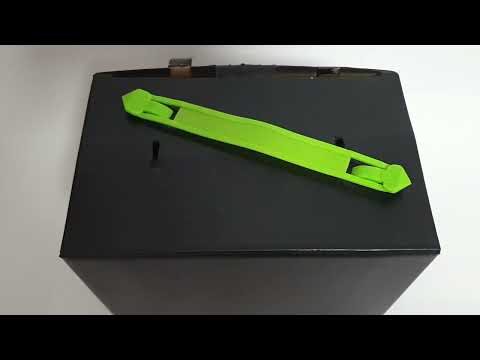
A warehouse worker lifts a heavy corrugated box, relying on a carton box plastic handle clipped into the board’s precut slots to distribute the weight evenly. This simple accessory works by inserting its flexible tabs through pre-punched holes, creating a secure grip point that prevents the box from tearing under strain. It spares users from awkwardly clutching the cardboard edges, reducing hand fatigue and the risk of dropped loads during transport.
Why Corrugated Containers Now Feature Built-In Carry Solutions
Corrugated containers now integrate built-in carry solutions to eliminate the clumsy afterthought of attaching a separate carton box plastic handle. This design evolution directly addresses the common failure point where a later-added handle rips the cardboard, especially under heavy loads. By die-cutting reinforced slots that interlock with a rigid plastic handle, the entire box structure shares the weight instead of concentrating stress. This seamless integration transforms a basic shipping carton into a reusable shopping caddy, merging carrying ergonomics with the box’s inherent stacking strength. The result is a package that feels finished, not retrofitted, enabling confident one-handed transport without adhesive or labor.
Market Demand for Convenient Packaging Ergonomics

People hauling online orders or grocery deliveries want an easy grip, not a wrestling match. Convenient packaging ergonomics drives the demand for built-in plastic handles on corrugated boxes, because a molded carry slot lets you balance weight without straining fingers. Shoppers now expect to grab a heavy carton by its handle, not hug it awkwardly. If the handle feels flimsy or the cutout digs into your palm, that box gets mentally flagged as frustrating.

Evolution from Rope and Die-Cut to Polymer Inserts
Early carry solutions relied on rope threaded through crude die-cut holes, which quickly frayed or tore the board. The evolution from rope and die-cut to polymer inserts marked a leap in durability and comfort. Molded plastic handles, like the Poly Insert Handle, distribute weight evenly, eliminating the stress points that once caused failure. This shift replaced weak, temporary solutions with a robust, built-in carrying system. Superior load-bearing polymer inserts now allow users to transport heavy cartons safely without the handle ripping out.
The evolution from rope and die-cut to polymer inserts moved corrugated containers from unreliable, temporary carries to durable, integrated plastic handles that bear weight without tearing.
Material Innovations in Grip Attachments for Fiberboard Packaging

Recent material innovations in grip attachments for fiberboard packaging focus on biocomposite and recycled polymer handles that maintain strength while reducing plastic use. These carton box plastic handles now incorporate additives like glass fiber or talc to improve rigidity without increasing weight. A key advancement is the use of co-injection molding, which creates a soft-touch outer layer over a rigid core, improving comfort during transport.
This dual-material approach prevents handle snapping under heavy loads while offering carton box plastic handle a non-slip grip, even when hands are damp.
Additionally, some handles now integrate a thin, flexible metal wire within the plastic to allow the handle to lie flat against the box when not in use, preventing snags during stacking.
Polypropylene vs. Recycled Resin for Load-Bearing Components
For load-bearing components in carton box plastic handles, virgin polypropylene offers superior tensile strength and impact resistance over recycled resin, which can suffer from degraded polymer chains. This makes polypropylene the reliable choice for heavy-duty attachments that must not snap under stress. However, advanced recycled resins now achieve comparable durability for moderate weight loads when reinforced with additives, though they may exhibit slightly lower flexural modulus. The key practical distinction lies in consistency: polypropylene provides predictable performance batch-to-batch, while recycled resin introduces variance that can compromise handle integrity for maximum load thresholds.
| Aspect | Polypropylene | Recycled Resin |
|---|---|---|
| Tensile Strength | High, consistent | Moderate, variable |
| Impact Resistance | Excellent | Good with reinforcement |
| Load Reliability | Predictable for heavy loads | Suitable for medium loads only |
UV Stabilizers and Flexibility Enhancements in Molded Handles
UV stabilizers are integrated into molded handle polymers to prevent photo-degradation from prolonged sunlight exposure, which otherwise causes surface embrittlement and cracking in fiberboard packaging handles. Flexibility enhancements, achieved through plasticizer modifications or elastomeric blending, maintain the handle’s ability to absorb impact stress without fracturing during repeated lifting. The combination of hindered amine light stabilizers and toughened polypropylene ensures the handle retains pliability while resisting UV-induced chain scission, directly extending functional lifespan in outdoor storage environments.
UV stabilizers block radiation-induced brittleness, while flexibility additives preserve elastic deformation under load, together preventing handle failure from photochemical aging and mechanical fatigue.
Structural Design Variations for Different Load Capacities
For lightweight boxes under 10 kg, plastic handles often feature integrated pull-tabs cut directly into the box’s side panel, using a thin, flexible plastic strip that folds out. As load capacity increases to 20–30 kg, handles shift to attached clip-in loops with a thicker cross-section and reinforced attachment points to distribute stress. For heavy-duty loads exceeding 30 kg, you’ll see wrap-around ergonomic straps with a central grip that transfers weight to the entire box structure. The key variation is that heavier loads require gussets or ribs molded into the handle’s base to prevent the plastic from snapping under tension, as a simple flat handle lacks the necessary structural integrity against shear forces.
Single-Point Strap Attachments for Light Retail Boxes
For light retail boxes, single-point strap attachments for carton box plastic handles offer a streamlined solution. These attachments secure a single plastic strap to one box panel, distributing the load of items like cosmetics or small electronics directly beneath the handle anchor. This design avoids complex internal bracing, making it ideal for boxes under 5 kg. The strap is typically heat-sealed or riveted through a pre-cut slot, ensuring the handle remains flush with the surface for efficient stacking. While less robust than multi-point systems, single-point attachments reduce material costs and assembly time, providing a practical balance for lightweight packaging needs.
Reinforced Multi-Rivet Systems for Heavy-Duty Shipping Cartons
For heavy-duty shipping cartons, reinforced multi-rivet systems distribute load stress across multiple attachment points, preventing handle tear-out under extreme weight. Multi-point load distribution is critical, as each rivet shares the tensile force, allowing handles to secure cartons exceeding 30 kg. These systems use interlocking rivets with wide flanges that embed into corrugated board layers. Rivet spacing must be calculated to align with flute direction for optimal structural integrity. The result is a handle that withstands repeated lifting without deforming the carton wall.
- Uses 4–6 rivets per handle end, spaced 15–20 mm apart
- Requires reinforced plastic backplates to prevent rivet pull-through
- Compatible with double- or triple-wall corrugated board
Installation Methods and Automated Application Processes
The installation of a carton box plastic handle is streamlined through automated application processes, utilizing roll-fed or pre-cut handle strips fed directly into high-speed case erectors. A robotic arm precisely aligns the handle over pre-cut slots, then heat-staking or ultrasonic welding melts the plastic tabs to the corrugated board, creating a permanent bond without adhesives. For maximum efficiency, automated systems integrate with the box forming line, applying handles at speeds exceeding 30 boxes per minute. The key detail is that the heat-staking cycle must be calibrated to match board thickness, preventing burn-through or weak attachment, ensuring the handle bears the full carton weight reliably during lifting and transport.
Threaded Rivet Insertion for High-Speed Packing Lines
In high-speed packing lines, automated threaded rivet insertion secures plastic handles to carton boxes via a vertically-oriented, cam-driven spindle. The system feeds rivets pneumatically from a vibratory bowl, precisely aligns them with pre-drilled handle flanges and box panels, then rotates the spindle to thread the rivet body into the mandrel. A controlled pull stroke deforms the rivet tail, creating a permanent joint without manual intervention. Cycle times stay below 1.5 seconds per rivet to maintain line throughput. Self-piercing variants can penetrate the carton board without pre-drilling, reducing machine footprint and material handling steps.
Heat-Sealed Plastic Clips for Tamper-Evident Seals
Heat-Sealed Plastic Clips for Tamper-Evident Seals are applied directly after the handle is fixed, using automated thermal crimping equipment. The process begins with feeding a pre-formed clip over the handle’s attachment points, then applying controlled heat and pressure to fuse the clip’s ends into a permanent bond. This creates a one-way lock that breaks upon first opening, providing visual evidence of tampering. Integration with automated lines requires precise temperature calibration and dwell time to avoid melting the carton board while ensuring the seal’s integrity.
- Align the clip over the handle base after attachment.
- Activate heated jaws to crimp and fuse the clip closed.
- Cool briefly under pressure to set the tamper-evident bond.
Functional Benefits Beyond Simple Portability
A plastic handle on a carton box transforms its utility by enabling stable one-handed carrying, which frees the other hand for tasks like using keys or opening doors. This design facilitates balanced weight distribution, reducing strain during repetitive lifting or when moving awkwardly shaped contents. The handle’s integrated structure also prevents boxes from tipping when slid off shelves, as your grip controls the orientation. Q: How does a handle improve access within storage? A: It allows you to pivot the box vertically with one hand, reaching items without fully extracting the container. This ergonomic advantage turns a simple package into a precise tool for inventory rotation or quick retrieval, making the handle a functional hub for efficiency rather than just a carry point.
Weight Distribution and Reduced Wrist Strain During Transport
A plastic handle transforms how you carry a box by shifting the load from your fingertips to your palm, which is far better for your natural grip. This reduces wrist strain during transport because the handle’s centered attachment distributes the weight evenly across your hand instead of forcing your wrist into an awkward angle. Carrying a heavy carton without a handle often makes your wrist bend backward, but the handle keeps it straight and aligned. This simple change means less fatigue and discomfort, even over longer distances through a warehouse or parking lot.
How does the handle actually reduce wrist strain? It shifts the center of gravity closer to your grip, so your wrist doesn’t have to support a sideways tug—your arm and shoulder do the work instead.
Secondary Uses for Hanging Display or Warehouse Organization
The plastic handle transforms a simple carton box into a ready-made hanging display for retail shelves or pegboards, letting you showcase products like craft kits or hardware without extra fixtures. In the warehouse, these handles allow for quick vertical storage, letting you stack or hang boxes on rails to maximize floor space and access. This dual role makes hanging storage for retail and warehouse a practical upgrade for any box.
- Hang boxes on peg hooks for instant retail product displays without shelving.
- Utilize handles to suspend boxes from warehouse racks for organized bulk storage.
- Create easy-access sorting systems by hanging labeled boxes on wall rails or grids.
- Use handles to group and hang multiple boxes for bundled shipment or seasonal storage.
Sustainability Challenges and Eco-Friendly Alternatives
The main sustainability challenge with a carton box plastic handle is that it creates a mixed-material waste stream. While the cardboard box can be recycled, the small, often non-detachable plastic handle contaminates the paper recycling process, forcing the whole unit into a landfill. For an eco-friendly alternative, look for cartons with die-cut handholes or reinforced paper handles made from the same fiber as the box. These are fully recyclable as a single item. For heavier loads, some makers use biodegradable bioplastic or compostable hemp cord handles, which break down without leaving microplastic residue.
The key insight: a handle that is inseparable from the box and made of the same material is the simplest way to kill two birds with one stone—ease of carry and zero recycling headaches.
Always check if you can tear off the plastic handle before tossing the box.
Biodegradable Polymer Blends and Compostable Handle Options
Switching to compostable handle options for carton boxes often involves using biodegradable polymer blends. These mixes combine materials like PLA from cornstarch or PBAT with natural fibers to create a handle that breaks down in industrial composting facilities. Unlike standard plastic, these blends don’t leave toxic residues behind when disposed of correctly. You’ll find these handles feel similar to traditional plastic but have a slightly different texture. Just ensure your local facility supports compostable plastics, as home composting usually isn’t hot enough to break them down quickly.
Biodegradable polymer blends offer a practical, friendly shift by creating compostable handles that break down completely in the right composting setup, reducing long-term waste.
Mono-Material Designs for Easier Recycling of Combined Waste
Mono-material designs eliminate the need to separate the handle from the carton by manufacturing both components from a single polymer, typically high-density polyethylene, allowing the entire package to enter the recycling stream as one uncombined waste stream. This approach requires engineering the carton’s moisture barrier and the handle’s structural ribs from the same resin, ensuring the material remains homogeneous during reprocessing. The sequence for achieving this includes:
- Selecting a single polymer compatible with both corrugated board coating and handle injection molding.
- Designing the handle’s snap-fit geometry to avoid adhesive or metal fasteners.
- Verifying the entire assembly passes mono-material recyclability testing at standard facilities.
Such cohesion prevents downcycling caused by mixed-material contamination, directly improving closed-loop recovery rates for carton-box waste.
Industry-Specific Applications Across E-Commerce and Retail
In e-commerce fulfillment centers, carton box plastic handles are specifically applied to heavy or oversized product cartons, such as bulk pet food or multi-unit bundles, to reduce worker fatigue during picking and packing. For retail, these handles are often integrated into shelf-ready packaging for large home goods, enabling customers to easily carry items like storage bins directly from the floor display. A crucial specification is that the handle’s load rating must match the carton’s fill weight to prevent tearing during transit. Be aware that for fragile electronics, a handle’s attachment point can create a stress concentration on the carton wall, risking damage if not reinforced with a substrate liner. The most effective application uses low-profile, ergonomic handles that do not interfere with automated conveyor systems or standard pallet stacking patterns. Always test handle placement to ensure it does not obstruct barcode scanning or access to the carton’s seal flap.
Subscription Boxes Requiring Durable Reusable Handles

Subscription boxes demand handles that withstand repeated monthly shipping cycles without snapping. A reusable carton box plastic handle ensures subscribers can easily lift and reposition the box for storage or gifting. The handle must anchor firmly into the corrugated board to resist wear from frequent opening. This durability directly impacts customer retention, as a broken handle frustrates unboxing and devalues the curated experience. Design choices like reinforced rivets or over-molded grips prevent failure across varied product weights.
Durable reusable handles transform subscription boxes from disposable packaging into long-term storage solutions, maintaining brand presence in homes.
Grocery Delivery Cartons with Moisture-Resistant Grip Zones
For grocery delivery, cartons integrating plastic handles require moisture-resistant grip zones to ensure safe transport of chilled or frozen items. These grip zones are textured, non-slip surfaces molded directly into the handle’s contact area, preventing hand slippage when cartons are wet from condensation or dripping produce. The plastic handle itself is typically attached through die-cut holes in the carton, but the moisture-resistant zone is not a handle coating; it is an engineered pattern on the handle’s exterior. This design directly addresses the failure point where a wet carton would otherwise be dropped, maintaining user control during doorstep delivery without requiring additional packaging materials.
Testing Standards for Safety and Durability Under Stress
For a carton box plastic handle, testing standards for safety and durability under stress mandate a static load test where the handle must support at least 50 kg for 30 minutes without cracking or deforming at the attachment point. Cyclical stress testing then applies 200 full-load lifts to simulate repeated warehouse handling, ensuring no fatigue failure occurs. Drop tests from one meter onto concrete replicate real-world drops, verifying the handle does not snap or detach from the box. All tests use calibrated weights and a controlled environmental chamber at 40°C to account for thermal stress, as plastic weakens with heat. Passing these protocols guarantees the handle withstands everyday abuse without sudden failure, protecting both goods and handlers.
Pull-Force Resistance Metrics for Consumer Safety Compliance
Pull-force resistance metrics for consumer safety compliance establish the minimum load a carton box plastic handle must withstand before failure, measured in Newtons per standardized test protocols. A peak pull-force threshold of 150-200 N typically denotes safe operation for single-use handles, preventing detachment when a consumer lifts the box vertically. Engineers apply a consistent strain rate via a tensile testing machine, recording the handle’s deformation curve. If the handle fractures before reaching the threshold, it fails compliance, indicating inadequate material thickness or weld integrity. The metric directly informs handle geometry adjustments, ensuring the user experiences no sudden breakage under expected load.
Pull-force resistance metrics quantify the exact tensile limit a handle must exceed, directly linking material strength to consumer safety by preventing abrupt failure during normal lifting.
Temperature Cycling and Load Fatigue for Cold Chain Logistics
For cold chain logistics, the plastic handle must endure extreme thermal cycling and load fatigue without becoming brittle or snapping. Test protocols rapidly shift the handle from -20°C freezer environments to 40°C humid conditions, simulating real-world warehouse and transit transitions. Simultaneously, the handle undergoes repeated weight cycles at maximum designed load, evaluating stress fractures at the rivet or weld points. A handle that survives twenty freeze-thaw cycles still risks sudden failure if its polymer core has developed micro-cracks from oscillating tension.
- Cycling between -20°C and 40°C within 30 minutes to test thermal expansion tolerance
- Applying 150% rated load for 500 repetitive lifts to assess fatigue at the handle base
- Monitoring handle deformation and grip integrity after each temperature shock phase
Cost Analysis and ROI for Integrating Carrying Mechanisms
The cost analysis for integrating carrying mechanisms into a carton box plastic handle reveals that the initial per-unit expense of adding handles is offset by reduced secondary packaging labor and material waste. A simple die-cut handle costs approximately $0.01–$0.03 per box, while injection-molded handles add $0.05–$0.10, but eliminate the need for tape or strapping to create a grip. The ROI for integrating carrying mechanisms becomes tangible when you factor in faster packing station throughput and fewer damaged boxes from poor lifting. For a facility shipping 10,000 units monthly, automating handle application can yield a six-month payback. The real margin boost comes from customer retention: a secure handle prevents dropped boxes, directly reducing replacement claims and repeat shipping costs.
Material Upcharge vs. Reduction in Secondary Packaging Needs
The primary cost tension lies in the material upcharge for plastic handles versus the tangible reduction in secondary packaging needs. By integrating a handle directly into the carton box, you eliminate the requirement for corrugated dividers, outer shrink wrap, or extra padding that were previously necessary to protect a loose product during transport. This transition follows a clear sequence: first, you remove the cost of the outer box or film; second, you subtract the labor and material for internal cushioning; third, you absorb only the per-unit handle cost. The net effect often yields a lower total packaging expenditure, as the handle’s added polymer weight is outweighed by the total corrugated and plastic waste avoided.
- Remove the secondary box or shrink wrap that previously stabilized the product.
- Eliminate internal void-fill or dividers that prevented shifting.
- Add the single, integrated handle piece to the primary carton.
Customer Satisfaction Scores Linked to Ergonomic Lift Features
Higher customer satisfaction scores directly correlate with the inclusion of integrated ergonomic lift features in the plastic handle. Users report a significant decrease in strain during lifting, which increases perceived product quality. The sequence for achieving this link involves:
- Designing the handle to distribute load across the palm, reducing finger stress.
- Ensuring the handle adds structural rigidity to the box, preventing flex.
- Measuring post-use satisfaction via surveys that specifically rate handle comfort during transport.
This iterative feedback loop allows manufacturers to refine handle shape and material density, directly improving repeat purchase rates tied to user comfort.
Future Trends in Smart and Integrated Handling Components
Future trends in smart handling components for carton box plastic handles will focus on integrating micro-sensors directly into the handle substrate during molding. These embedded sensors will monitor the dynamic load and number of lift cycles, wirelessly transmitting data to warehouse management systems. This enables predictive maintenance alerts when a handle approaches its fatigue limit, preventing failure. Self-healing polymers will become standard, allowing microscopic cracks from repeated sharp impacts with the box to autonomously seal using embedded microcapsules, extending the handle’s functional lifespan. Additionally, RFID tags will be co-molded into the handle’s grip, merging structural integrity with automatic asset tracking for each box. The handle itself becomes the primary node for logistics data collection, moving beyond a passive grip to an active, intelligent component.
RFID-Embedded Handles for Inventory Tracking During Transit
RFID-embedded handles turn a standard carton box plastic handle into a live tracking node during transit. Each handle contains a tiny chip that logs every scan as boxes move through loading docks, truck interiors, and conveyor belts. This eliminates manual counting and guesswork about which pallet holds what. Real-time location visibility comes directly from the handle, so dock workers can scan a whole stack without touching each box. Q: Does the RFID chip survive rough handling on delivery trucks? Yes, the chip is sealed inside the plastic handle’s core, protecting it from bumps, moisture, and temperature swings during transit.
Biometric or Sensor-Enabled Grips for High-Value Shipments
For high-value shipments, future biometric or sensor-enabled grips transform a standard carton box plastic handle into a real-time security checkpoint. These grips only unlock the handle’s load-bearing latch after scanning an authorized fingerprint, preventing theft during transit. The sequence is streamlined for speed:
- The handler’s skin contact activates a capacitive sensor embedded in the handle’s surface.
- A minute onboard chip verifies the biometric signature against a preloaded database.
- A micro-solenoid releases the plastic grip’s locking pin, allowing it to articulate and bear weight.
Simultaneously, an integrated accelerometer detects any sudden, unauthorized yanking; if the grip isn’t biometrically unlocked, the handle physically locks rigid, turning the box into an immovable object until the correct user touches it again.
What Exactly Is a Plastic Handle for Cardboard Boxes?
How These Handles Attach to Standard Corrugated Boxes
Key Components: The Strap, the Grip, and the Anchor Plate
