
Precision Tooling for High-Volume Production
Precision Automotive Injection Molding Services for Reliable, High-Quality Parts
Getting precision parts for your vehicle’s build can be a headache, but automotive injection molding services solve that by melting plastic pellets and injecting them into custom steel molds to form exact components. This process produces durable, lightweight parts like dashboards and bumper covers with incredible repeatability and tight tolerances. You simply provide a design file, and the service handles mold creation and high-volume production, delivering finished pieces ready for assembly. The key benefit is that it slashes per-part costs at scale while maintaining consistent quality across every single unit.
Precision Tooling for High-Volume Production
For high-volume automotive production, precision tooling relies on hardened steel molds machined to tolerances within microns. Each cavity is engineered with advanced conformal cooling channels, drastically reducing cycle times while maintaining flawless part consistency across millions of shots. We watched a single mold for a dashboard panel run 24/7 for eighteen months with zero dimensional drift. The steel’s grain structure is specifically selected to resist wear from glass-filled nylon, preventing surface degradation that would otherwise introduce flash. Every ejector pin is ground and fitted to within 0.005mm to avoid marring the A-surface on interior trim components. This is where the molding press becomes less a machine and more a finely tuned orchestra. Such tooling eliminates post-mold machining, locking in repeatability for every bumper or bezel produced.
Multicavity Mold Design for Reduced Cycle Times
For automotive high-volume production, **multicavity mold design for reduced cycle times** directly accelerates throughput by molding multiple identical components—such as clips, connectors, or small brackets—per single press cycle. Each cavity is precisely balanced via flow simulation to ensure uniform fill pressure, preventing overpacking or short shots that cause warpage and scrap. Optimized conformal cooling channels, routed with additive-manufactured inserts, rapidly extract heat from each cavity simultaneously, slashing cooling phases by up to 40%. This parallelism shrinks overall cycle time without sacrificing part quality or dimensional consistency.
Q: How does multicavity mold design for reduced cycle times handle uneven cooling between cavities?
A: It uses engineered cooling circuits with baffles or bubblers tailored to each cavity’s thermal load, plus flow restrictors, to achieve uniform heat extraction, eliminating hot spots and prolonging tool life.
Hot Runner Systems and Their Impact on Part Consistency
In automotive injection molding, hot runner systems maintain melt within the manifold, eliminating cold runner waste and directly enhancing shot-to-shot uniformity. This controlled thermal profile ensures each cavity fills with identical viscosity and pressure, producing parts with consistent dimensional tolerances and surface quality. By synchronizing gate temperatures, hot runners prevent sink marks and flow lines in complex geometries like dashboard panels. The result is precision thermal control for uniform cavity fill, critical for high-volume runs where even minor deviations compromise assembly fit.
Hot runner systems deliver consistent melt temperature and pressure to every cavity, eliminating variability that cold runners introduce, ensuring each automotive part meets exacting specifications cycle after cycle.
Advanced Steel Choices for Extended Mold Lifespan
For extended mold lifespan in high-volume automotive production, selecting advanced steel grades like H13, S7, or premium pre-hardened variants is critical. These materials offer superior wear resistance and thermal conductivity, reducing downtime from repair. Premium tool steel selection directly influences cavity durability against abrasive glass-filled polymers. While P20 steel suits lower cycle counts, opting for high-hardness stainless alloys prevents corrosion from cooling-line condensation. Proper heat treatment and surface nitriding further combat fatigue cracking, ensuring consistent part quality across millions of cycles without compromising dimensional stability.
Material Selection for Interior and Exterior Components
Material selection for automotive injection molding services directly dictates component performance, balancing aesthetics, durability, and cost. For interior components, materials like ABS and PP are chosen for their balance of surface finish and impact resistance, with TPEs or soft-touch coatings applied for tactile controls. Exterior parts, such as bumpers or trim, require weather-resistant polymers; UV-stabilized ASA or painted PC/ABS blends prevent degradation from sunlight and temperature extremes. Glass-filled nylon provides structural rigidity for underhood or bracket applications. Mold shrinkage and warpage must be calculated for each resin to ensure dimensional accuracy in large exterior panels. Recycled polypropylene also finds use in hidden non-visible interior clips, reducing material costs without compromising strength. Every grade must also pass flammability and fogging standards specific to each component zone.
Engineered Thermoplastics for Under-Hood Heat Resistance
For under-hood environments, high-performance engineered thermoplastics replace metal due to their ability to withstand sustained engine bay temperatures exceeding 150°C. Polyphthalamide (PPA) and polyphenylene sulfide (PPS) deliver continuous heat deflection without warping, critical for intake manifolds and valve covers. Injection molding these resins requires precise mold cooling controls to manage their semi-crystalline behavior. **How does an injection molder test a new PPA grade?** They run thermal cycle trials on a complex prototype tool, measuring dimensional stability after repeated heat shocks. Ensuring zero weld-line weakness under the hood directly impacts coolant system reliability and turbocharger air-path seals.
Lightweight Alternatives Driving Fuel Efficiency Gains
By substituting dense materials with lightweight injection molded alternatives, automakers directly reduce component mass, lowering the energy required for acceleration. Replacing traditional steel brackets with glass-filled nylon structures trims kilogram-level weight from door panels and dashboards without sacrificing rigidity. Foamed polypropylene in interior trim further cuts density through gas-assisted molding, producing parts that use less raw material while maintaining impact performance. Every gram shed through optimized resin selection and thin-wall design translates to measurable kilometers per liter gains, as the engine expends less force to move the vehicle. Microcellular foam injection molding enhances this effect by creating a cellular core, slashing weight by up to 20% in exterior mirror housings and glovebox doors.
Surface-Quality Additives for Class A Finishes
For flawless Class A surface finishes in automotive injection molding, precise surface-quality additives are critical. These additives, typically micronized waxes or silicone-based agents, migrate to the part’s surface during cooling, filling microscopic voids and reducing coefficient of friction. The selection depends heavily on the base resin and the desired gloss level, as mismatched additives can cause haziness or poor paint adhesion. A clear sequence follows:
- Identify the base polymer’s shrinkage and flow characteristics.
- Select an additive type (e.g., polytetrafluoroethylene for scratch resistance, amide wax for smooth feel).
- Disperse the additive at 0.5–2% loading to prevent plate-out or weld-line defects.
This ensures a defect-free, high-gloss surface without secondary sanding or coating.
Advanced Techniques for Complex Geometries
For automotive injection molding services, tackling complex geometries demands precision beyond standard tooling. Moldflow analysis optimizes gate placement and cooling channels for intricate, thin-walled components like air intake manifolds, preventing warpage. Gas-assisted injection molding creates hollow sections in structural parts, reducing weight without sacrificing strength. Core-cavity techniques with sequential valve gating allow seamless production of multi-contoured interior panels, ensuring consistent wall thickness even with deep ribs and sharp corners. These methods enable high-precision overmolding of dissimilar materials, such as embedding metal inserts into flowing plastic for sensor housings, achieving flawless integration without secondary assembly.
Gas-Assist Molding for Hollow Channels and Weight Reduction
Gas-assist molding creates hollow channels by injecting inert nitrogen gas into the molten polymer core, reducing material usage and cycle time. This technique enables lightweight hollow core design for structural components like handles and rails, maintaining strength while cutting mass. Gas pressure forces the melt against the mold walls, forming internal voids that eliminate sink marks and warp. Channel geometry must be aligned with flow paths to prevent gas breakthrough through thin walls.
- Reduces component weight by up to 40% compared to solid molding
- Eliminates secondary drilling for cable routing or fluid passages
- Lowers clamp tonnage requirements due to reduced injection pressure
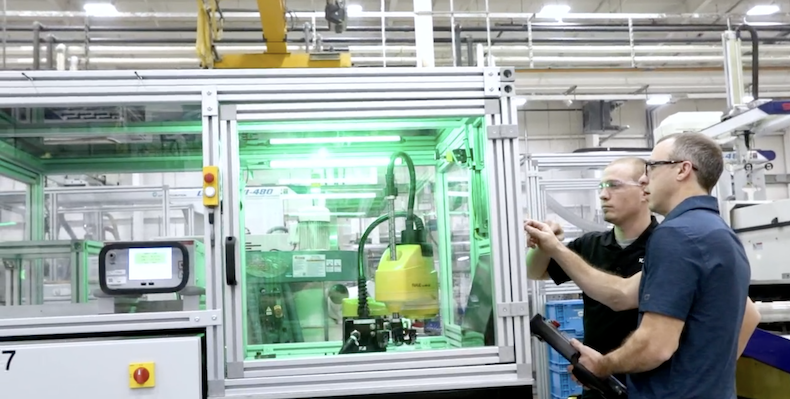
Two-Shot Overmolding for Integrated Seals and Grips
Two-shot overmolding bonds a rigid plastic substrate with a softer, elastomeric material in a single process cycle, eliminating secondary assembly for integrated seals and grips. This method creates durable, vibration-dampening touchpoints on steering wheels, shift knobs, or door handles without adhesives. The dual-material bond withstands automotive fluids and temperature swings. Integrated seal overmolding provides a water-tight barrier around connectors or housing covers, preventing leaks.
- Soft-touch grips reduce driver fatigue by absorbing road vibrations.
- Eliminates gaskets and clips for cleaner part design and lower weight.
- Seal lips formed directly onto housings prevent dust and moisture ingress.
Insert Molding for Threaded Fasteners and Metal Bonding
Insert molding for threaded fasteners and metal bonding places brass or steel inserts directly into the mold cycle, creating permanent, vibration-resistant threads inside plastic parts. This technique eliminates secondary tapping operations and ensures precise alignment even in tight engine bay spaces. For metal bonding, the process chemically and mechanically locks metal cores into the polymer melt, handling high torque loads without loosening. It’s a massive time-saver for assembling housings, sensor mounts, and fluid connectors, as the insert becomes a structural part of the component. You get a sealed bond that resists leaks and pull-out, all in one shot.
Insert molding for threaded fasteners and metal bonding gives automakers strong, leak-proof threads and metal cores integrated directly into complex plastic parts during molding, saving assembly steps and boosting reliability.
Quality Assurance Through Automated Inspection
In automotive injection molding services, Quality Assurance Through Automated Inspection ensures every part meets stringent dimensional and surface standards. High-speed vision systems scan each molded component for flash, sink marks, or short shots immediately after ejection, preventing defective parts from reaching assembly. Laser sensors verify critical tolerances on features like clips and mounting bosses with micron-level precision. This real-time feedback loop allows molding presses to adjust parameters such as hold pressure or cooling time automatically, reducing scrap rates and rework costs. By eliminating manual sampling, your production line achieves consistent first-pass yields for complex interior, exterior, and under-hood components.
Inline Vision Systems for Real-Time Defect Detection
Inline Vision Systems for Real-Time Defect Detection provide immediate, non-destructive inspection during the automotive injection molding cycle, scanning every part as it exits the tool. This real-time defect detection instantly identifies flash, sink marks, short shots, or dimensional variance, enabling automated part rejection without interrupting production flow. By catching non-conformities at the molding machine, you eliminate downstream sorting and reduce scrap costs.
- Detect micro-cracks, warpage, and surface blemishes at line speed
- Trigger automatic part separation with zero operator intervention
- Maintain consistent quality across high-volume, multi-cavity molds
Dimensional Verification Using 3D Scanning and CMM
Dimensional verification using 3D scanning and CMM directly confirms that every complex automotive mold cavity and finished part matches exact CAD tolerances. A CMM probe touches critical datums and hole locations for high-precision point-to-point measurement, while a structured-light 3D scanner captures the entire surface cloud in minutes. This dual approach catches subtle warpage, sink, or shrinkage that compromises fit in under-hood assemblies or interior trim. Rather than relying on caliper spot-checks, you get a color-map deviation report showing exactly where a gate or cooling channel adjustment is needed. This real-world data feeds back into mold flow analysis, slashing rework cycles on next-run tools.
- Use CMM to validate tight-tolerance bore and boss positions on manifolds or sensor mounts
- Deploy 3D scanning to map full freeform surfaces like dashboard contours against CAD
- Overlay scan-to-CAD data to identify hot-spot deviations for targeted tool modification
- Leverage GD&T reports from both methods to sign off on PPAP submissions with confidence
Material Flow Analysis to Prevent Warpage and Sink Marks
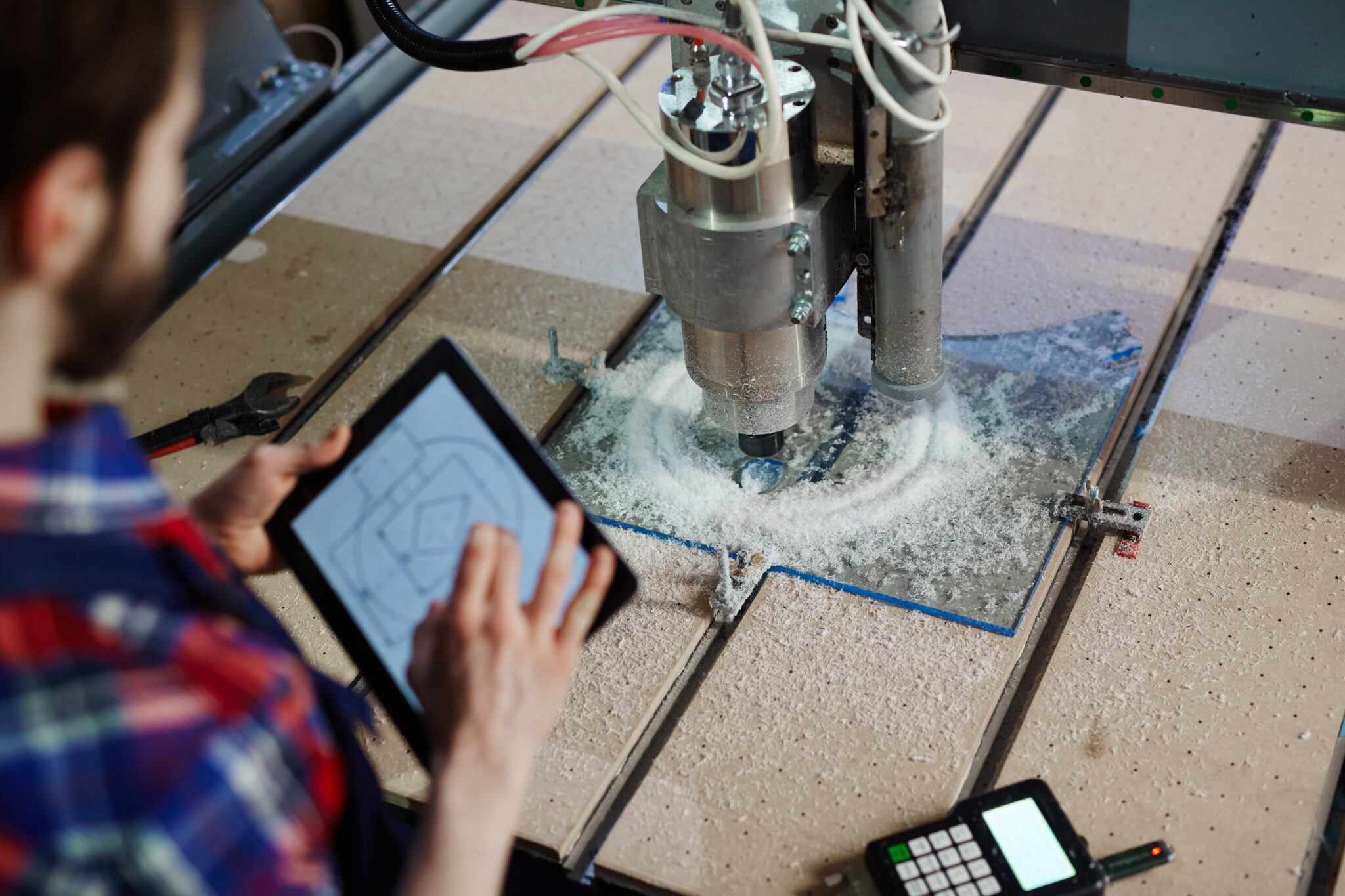
Material Flow Analysis (MFA) simulates polymer behavior within the mold cavity, directly targeting warpage and sink marks. By evaluating fill patterns, pressure distribution, and cooling rates, engineers identify imbalanced flow that causes differential shrinkage. Adjusting gate locations or wall thicknesses based on MFA results ensures uniform packing and consistent material density. This prevents localized depressions (sink marks) and dimensional distortion (warpage) before steel is cut. For automotive injection molding services, applying MFA early in tool design reduces costly mold rework and ensures part geometry meets strict tolerances. The analysis provides a data-driven path to eliminate flow-induced defects through predictive simulation of melt behavior.
Scaling Prototypes to Full Production Runs
Scaling prototypes to full production runs in automotive injection molding requires a meticulous shift from single-cavity, low-pressure cycles to high-output, multi-cavity tooling optimized for production-grade material validation. You must first re-confirm shrinkage rates and gate placement from prototype trials, as full-run tool steel expands differently than aluminum. Integrating conformal cooling channels during this phase is critical to achieve uniform thermal distribution, preventing warpage in complex parts like dash panels or bumper brackets. Adjust your process parameter window—specifically injection speed and pack pressure—to maintain tolerances across a 24/7 cycle without cosmetic defects. Work with your molder to validate a DFM report that accounts for slide wear and ejection force under sustained high-volume demands.
Low-Volume Tooling for Pre-Launch Validation
Low-volume tooling bridges the gap between prototype parts and full-scale production by using aluminum or soft steel molds for pre-launch validation. This approach lets you verify fit, function, and assembly sequences without committing to hardened production tooling. **Rapid tooling iterations** become feasible, allowing design tweaks after initial test runs. Bridge production tooling delivers hundreds to thousands of parts, simulating final material shrinkage and cycle times. When should automakers switch from low-volume to hard tooling? Switch once dimensional capability studies on 50+ parts show Cpk above 1.33 and all critical interfaces pass assembly trials, typically after 1–3 soft tooling revisions.
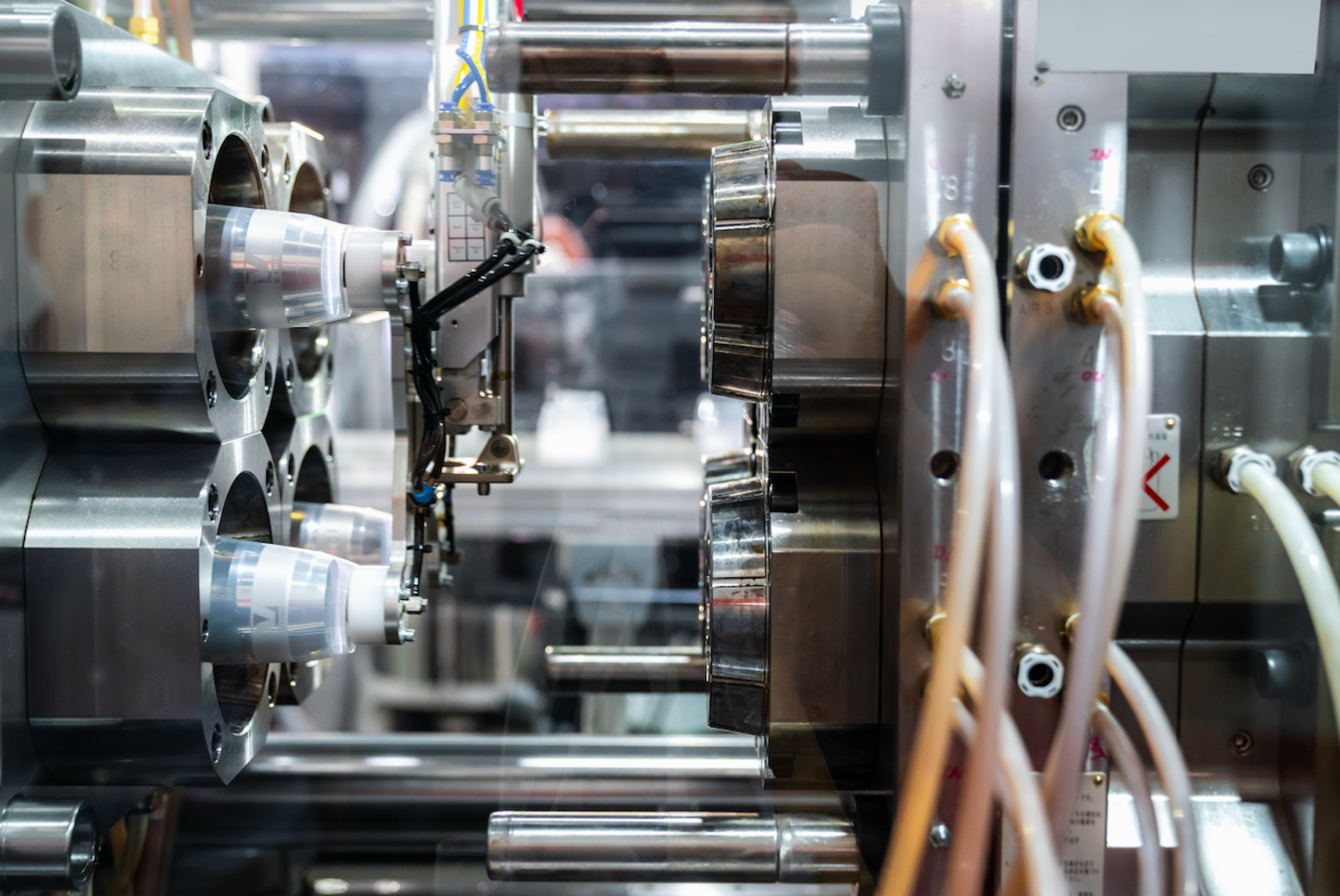
Process Monitoring for Repeatability Across Shifts

Automotive injection molding services rely on real-time process parameter tracking to lock-in repeatability across shifts. Sensors monitor melt temperature, injection speed, and hold pressure at every cycle, automatically flagging deviations that would alter part dimensions or surface finish. This continuous data logging allows operators on different shifts to start from identical machine conditions, preventing drift caused by ambient temperature changes or material lot variations. Instead of relying on subjective visual checks, your quality team receives quantifiable reports showing every shot matched the golden batch parameters. Q: Does shift change impact dimensional consistency? Yes, unless your molder enforces closed-loop monitoring—only then can you guarantee that the night shift produces parts identical to the morning run.
Cost-Efficient SPC Strategies for High-Volume Orders
For high-volume automotive production, implement real-time process monitoring systems that automatically log critical parameters like melt temperature and pressure. This eliminates manual data collection costs while enabling immediate corrective actions. Use variable control charts on a sampling basis rather than inspecting every part, focusing resources on process stability verification. Prioritize gated defect tracking—flag early signs of drift before scrap accumulates. Automate feedback loops to adjust machine settings in seconds, reducing waste and labor hours.
- Deploy statistical sampling plans (e.g., ANSI/ASQ Z1.4) with tightened inspection during mold startup to catch shifts immediately.
- Use pre-control charting for continuous short-run monitoring without excessive data entry.
- Integrate SPC software with your ERP to trigger auto-hold on out-of-tolerance batches.
Lean Manufacturing and Supply Chain Integration
Lean Manufacturing and Supply Chain Integration in automotive injection molding services synchronizes mold changeover protocols with just-in-time raw material deliveries from tier-one suppliers. By aligning production cells directly with real-time vehicle assembly FOX MOLD plastic injection mold manufacturer schedules, you eliminate warehousing for finished trim parts and reduce WIP. A key insight:
integrating your molding press electronics with the OEM’s sequencing system enables dynamic lot-size-one runs, slashing changeover downtime to under five minutes while ensuring zero stockouts on bumper fascias or interior panels.
This closed-loop flow means every molded component moves straight from the press to the assembly line, cutting lead times and scrap from changeover purge waste.
Just-in-Time Delivery Coordinated With Assembly Plants
Just-in-time delivery coordinated with assembly plants eliminates large warehousing costs by synchronizing injection-molded part shipments directly with the vehicle production schedule. Parts arrive at the plant dock only hours before they are needed on the line, reducing inventory carrying expenses and freeing up factory floor space. This precision requires your injection molding supplier to operate with zero-defect quality and absolute schedule adherence, as any delay stops the entire assembly line. Even a single missing component can halt thousands of vehicles, making supplier reliability as critical as part quality. You gain a leaner, more responsive supply chain where molded components arrive exactly when the assembly plant calls for them. The key benefit is predictable production flow without buffer stock, directly supporting your just-in-time manufacturing goals.
Secondary Operations (Ultrasonic Welding, Painting, Assembly)
In automotive injection molding services, secondary operations like ultrasonic welding, painting, and assembly are where your part truly gets finished. Ultrasonic welding bonds plastic components without adhesives, creating strong, leak-proof seals for fluid reservoirs or sensor housings. Painting adds a durable, high-gloss layer tailored to stringent automotive weathering standards. Assembly stations then integrate inserts, clips, or gaskets, often through lean one-piece flow to eliminate handling waste.
| Operation | Primary Use | Lean Impact |
|---|---|---|
| Ultrasonic Welding | Joining plastic parts seamlessly | Eliminates fasteners & curing time |
| Painting | Surface protection & finish | Integrated into molding cycle to reduce rework |
| Assembly | Insertion of hardware or seals | Single-piece flow minimizes WIP inventory |
Waste Reduction Through Regrind Reprocessing
In automotive injection molding services, closed-loop regrind reprocessing directly slashes material waste by reclaiming sprues, runners, and rejected parts. These scrap plastics are ground, blended with virgin resin at controlled ratios (typically 10–25%), and reintroduced into the production stream without sacrificing part integrity. This process eliminates landfill disposal and reduces raw material costs. The sequence is straightforward:
- Collect post-industrial scrap from molding operations
- Grind material into uniform regrind particles
- Mix regrind with virgin material at validated ratios
- Feed back into injection molding machines for new automotive components
By integrating this reprocessing loop, manufacturers achieve immediate waste reduction while maintaining tight automotive tolerances.